
Simple and Easy are far from the same thing. This series aims to start from the very beginning - Thread Control. Thread Control is the foundation of fly tying, consistency, and durability. Here we are starting from square one - Casting on, and building up a proper Thread Base from which all materials will have a firm foundation. These videos are going to progress quickly - Don't underestimate the importance and impact that mastery of the basics will have in your tying.

Here we are breaking down Thread Control into its simplest form - Constant Tension. Weather the goal is maximum pressure, or tying at light as possible, constant tension must be kept on the thread through a smooth and circular bobbin path. Aside from the Circular pathway, this video focuses on the Bobbin design and how to manipulate Thread Tension for the desired effect.

Catching materials is the singular moment in fly tying, for which Slack is acceptable. Slack however, is not something easily controlled. This video explains some pro and cons behind Thread Spinning, and details a superior way to catching materials while maintaining control over a slack thread - the Giovanni Method (Giovanni De Pace).
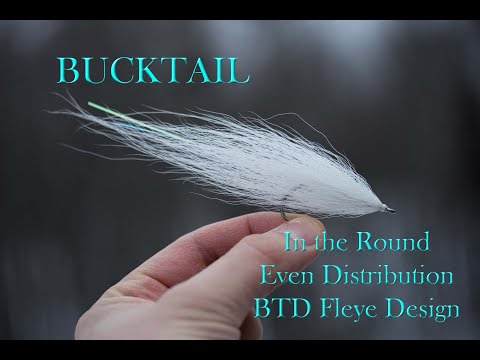
How to prepare bucktail for tying, how to catch and manipulate bucktail to achieve a symmetrical distribution, and a breakdown of Bob Popovics Bucktail Deceiver Fleye Design.

A breakdown of Bob Popovics' BULKhead Technique and Fleye Design. Emphasis on Hair Selection for Bulkhead Tying, catching materials perpendicular to hook axis, and building a symmetrical thread cone with light tension to control the flair.

Breaking down a Bucktail for specific Hair selection relative to Technique and Application! Bottom Third - Flair! BULKhead, Reverse BULKhead, Muddler Head/Buford Mid Third - Longest Hair, Medium Flare, Maintains Shape Top Third - Shorter Hair, Least Flair, great for Tails and Clousers.

This video breaks down Bob Popovics' Hollow Fleye Technique - Reversing the bucktail to create the largest and most cast-able flies out there. How to catch material Perpendicularly, Evenly Distribute, Bring the Thread Forward, Lock in the "Set" Wraps, Build up a Thread Ball, walk Light Tension Thread back over the Bucktail setting the "Hollow Fleye" angle. - Rinse and Repeat.

This video breaks down Bob Popovics' Reverse BULKhead Technique - Reversing the bucktail to create the largest and most cast-able flies out there, while keeping the bucktail butts long for building density forward, pushing water, and balancing out heavy wire hooks for flies that suspend.

If you are familiar with working complex dubbing loops, this won't take more than a try or two to get right and its all down hill from there. For those of you who may not have as much experience, I hope this video dials in some details to ease the journey!

Complete Break Down for the Techniques used in executing a Dubbing Loop. Emphasis on use with technically difficult materials such as Flashabou, Bucktail, or Stiff Synthetics. Along with a look into the ideal Dubbing Loop Tool Design.

Full walkthrough for how I treat Strung Fuzzy Fiber in a Dubbing Loop. The result is a Blunt faced silhouette (Bulkhead) imitation that is fully synthetic - full profile and water push, without the buoyancy for deeper presentations and faster sink rates.

This video breaks down Bob Popovics' BEAST Fleye Design - an enormous Extended Body Hollow Fleye for imitating the largest forage out there. In addition, I added a edited Step By Step on my Musky BEAST and a full breakdown of the components and layout.

Thread Selection for Streamer Fly Tying - Ideal Characteristics: Round, Build, Bite, Elasticity, and Strength.
Danville Fine Monofilament 0.006", Veevus Monofilament 0.008", 150 Denier Veevus GSP, 210 Danville Flymaster Plus

This video showcases the Steve Farrar method of introducing flash to create a single composite material for Fly Tying.

This video starts off a new series on tying Extended Body Flies, and focuses on the technique needed to start tying on Hard Monofilament. Hard Mono - Perlon Hard Monofilament Leader Material 30lb, 40lb, 50lb, 60lb

This video also Highlights one of Bob Popovics' favorite techniques - manipulating the fly Silhouette by pinching the bucktail into the desire shape upon setting the hair. The Dual Strand Extension is also useful for maintaining a constant orientation during the tying process for other fly styles outside of the Swimbait Hook.

This video breaks down Popovics' Hollow Tie Technique on a Hard Monofilament Extension followed by a discussion on Hollow tying on Mono vs. Dubbing Brush/BEAST extensions.

This video hopes to highlight possibilities in rigging tubes as a means to extend the fly body. This style of tying doesn't require any new technique to get started, can be lined through with nearly ANY material to connect it back to the hook (Mono, Floro, Nylon Coated Stainless Steel, and Nickel Titanium Wire (Knot 2 Kinky)), and has a large range of rigging options to best compliment a fly.

Diving into the nuance of Variable Tube Diameters, this video highlights the niche of the HMH Small Rigid Tubing with a breakdown of the Build-A-BEAST rigging with Extended Body Tubes.

The purpose of the dropper shank is to design a shank with a open loop in the rear to Split Ring Hooks on/off. This loop is dropped/lowered below the axis of the shank to increase the leverage of the bare hook creating a keel for the fly. These hooks swing freely, rarely fowl, and open the Gap considerably as compared to a standard Single Hook option.

Bob's Bucktail Deceiver is the foundation of nearly all Predator Flies, and certainly the Corner Stone of Bucktail Tying and Bucktail Fly Design. This pattern and these techniques will be used on repeat throughout the series as we discuss different variations for the Extension, of the Extended Body; highlighting different techniques to meet YOU where YOU are at in your tying and what materials you have available to you.

A full tying Step by Step focused on modern style Musky Flies.

A full tying Step by Step focused on modern style Musky Flies. This video breaks down my Build-A-BEAST fly, which is my adaptation of Bob Popovics' BEAST Fleye to Musky Fly Fishing.
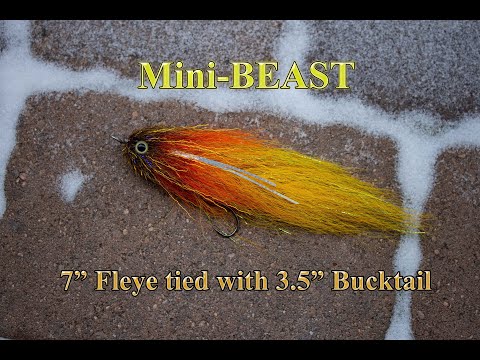
Tying a Mini BEAST off the cuff with the industry standard bucktail...roughly 3.5" in length.
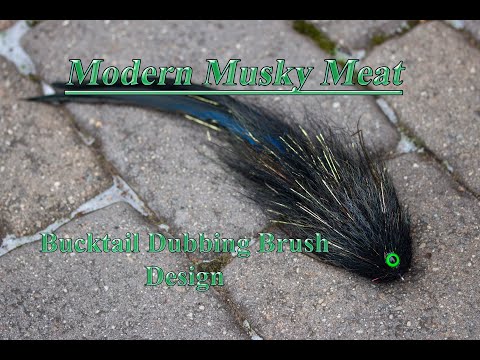
A full Step by Step focused on modern style Musky Flies. This video breaks down how I build my Bucktail Dubbing Brushes for building multi-sectioned extended body flies for targeting Musky.

After tying up samples for the Rio team, I had all the stuff out and ready to go....so I turned on a camera and put together a quick step by step for the commercial version of the "Big Game" Impostor.
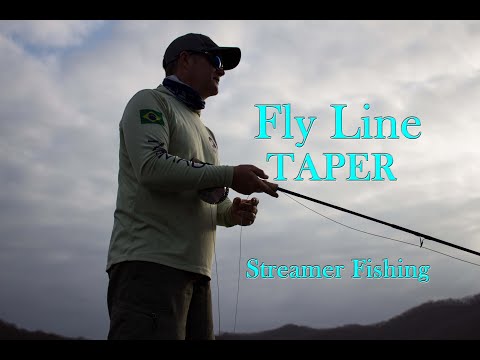
This video is all about Fly Line Tapers, and what you are looking for when selecting a Line for Streamer Fishing.

This video is all about Leader Builds for turning over Large Flies.

This video is all about Fly Line Grain Weight and the miss understanding that High Grain Wt. Lines sink quickly.

This video is all about the Non-Slip Loop Knot. In this video I demonstrate the Homer Rhodes Non-Slip Loop Knot, taught to me by Kelly Galloup. This knot allows for a loose fitting connection to the Fly, maximizing the Flies ability to change direction both laterally, and vertically.

This video is all about selecting the right fly rod length for the application. Something to consider with rods is the Longer they are, the more leverage the Line creates at the pivot point (your wrist) - making them more fatiguing to cast. The length of the rod has some implication as to the amount of line that can be carried when false casting, but because most streamer lines are condensed to conserve mass (30ft heads), short rods are very effective at handling and managing the line.

This video is all about the Two Hand Retrieve and Setting the Hook with the Fly Lines (Strip Set). The Two Hand Retrieve is phenomenal way to work a fly. It can be done both fast/slow, consistent/erratic, or shallow/deep. It is most applicable in straight like cast / straight line retrieve scenario (no mending) and when working a fly at some distance, usually more than 20ft away (30ft to 100ft plus).

This video is all about how to properly cast a Weight Forward (WF) Fly Line when trying to achieve distance greater than the length of the Fly Line Head.

This video is all about how to Water Load. Water Loading is a technique used to increase the load on a rod, storing more energy into the bland to aid in slipping out line. This is most useful when fishing large air resistant flies and having retrieved then all the way to the rod tip. Hope you enjoy

This video is all about Fishing up top, and getting the best hook ups possible. The retrieve is a Single Hand variation on the Two Hand Retrieve and makes it applicable to any situation where a single hard strip is desired, while keep the ability to pick up slack, and Set the hook with the Fly Line.

This video is all about how to properly time the double haul. A while back I had a phone conversation with Mark Sedotti, and I brought up the Double Haul as I wanted to know his thoughts on it. His reply wasn't what I had expected....he simply said he uses it to "keep tension on the rod".

I had the opportunity to head down to Tony, Wisconsin and spend an afternoon chasing Musky with Mr. Brad Bohen. We took some time over lunch to do a full length interview on Musky Fly Fishing and I wanted to pull this segment out and highlight it.
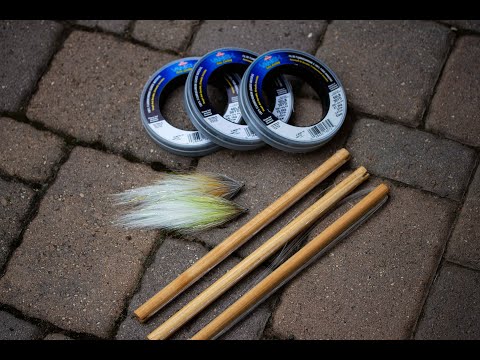
How to remove the memory from Monofilament and Fluorocarbon Leader Materials and how the Store them.

Matching the Arc to the Bend creates a Straight Line Path of the Rod Tip - this is the axiom of fly casting that generates a True Loop! A True Loop is a loop with Parallel Top and Bottom Legs. When combined with a Smooth Application of Power and Proper Timing....well, that's it. That's all you need right there.

Depending on the material composition of the fly, the Water absorbed by the pattern can often be the biggest aid in casting the fly out to distance. In this case, the Water tension of the bucktail reducing the overall profile of the fly and the weight added to it, makes these Monstrous bucktail flies a breeze to cast....as false casting increases, the flies dry out and casting performance decreases.

Quick off the cuff video discussing how modern streamer fly lines are designed and marketed, with the confusion surrounding the term "2 lines heavy".

Elbow on body, hand at shoulder height. DO NOT Externally Rotate the shoulder as a means to generate force in the fly cast!

Picked up a St. Croix Rods SOLE Fly Rod 9' 11wt (2015 - currently discontinued rod model) at a local retailer who had it in the corner collecting dust. Gave it a new home, chopped up one of the spare tips, and gave it a purpose in life....MUSKY ;)

This video is in response to some question from Instagram Posts with regards to building Custom Shanks for my Musky Flies.

The video breaks down the casting into both the Equipment side of things, as well as some simple casting advice. You can't cast big flies without both.

This video is all about getting Snags out (near surface)

This video is a run through of a Full Leader Build for Streamer Fly Fishing from start to finish to give some additional context to the Master Class Video: Leaders that Turn Over Flies

This video is all about how to Shoot Line through an "O". This simple adaptation at the end of the Haul allows you to feather out the line so as to let it land under tension. This allows you to animate flies immediately and better imitate Schooling baitfish. This also helps to stop the fly line from wrapping around guides/cork, but it does increase friction and will reduce overall distance.

This video is all about Open Stance Casting. Closed Stance casting dictates that your hips are square to the target, whereas Open Stance allows you to open up your hips presenting flies both to your forehand and backhand strokes. Open Stance puts you in a more athletic position helping to incorporate body movement and rotation. In addition presenting to your backhand increases the leverage of the double haul as well as relieving strain on your wrist.

This Video is all about finishing the retrieve, and triggering a boatside/at your feet strike from a following fish. Here the focus is on transitioning from the Double Hand to a Single Hand retrieve during the Strip Cadence, setting you up to SMOOTHLY direct the fly into a Lateral profile show. This profile show/change in direction is a great way to trigger a curious fish into smashing a fly, right at your feet.

Using Dr. William Hanneman's CCS to objectively measure one of my favorite Streamer Rods, the Chippewa River Custom Rod 1pc Predator, 8'10" 10wt. The purpose of this video is to introduce you to Bill's system for objectively measuring subjective criteria, to aid in the evaluation and comparison of various fly rods.