
Simple and Easy are far from the same thing. This series aims to start from the very beginning - Thread Control. Thread Control is the foundation of fly tying, consistency, and durability. Here we are starting from square one - Casting on, and building up a proper Thread Base from which all materials will have a firm foundation. These videos are going to progress quickly - Don't underestimate the importance and impact that mastery of the basics will have in your tying.

Here we are breaking down Thread Control into its simplest form - Constant Tension. Weather the goal is maximum pressure, or tying at light as possible, constant tension must be kept on the thread through a smooth and circular bobbin path. Aside from the Circular pathway, this video focuses on the Bobbin design and how to manipulate Thread Tension for the desired effect.

Catching materials is the singular moment in fly tying, for which Slack is acceptable. Slack however, is not something easily controlled. This video explains some pro and cons behind Thread Spinning, and details a superior way to catching materials while maintaining control over a slack thread - the Giovanni Method (Giovanni De Pace).

Complete Break Down for the Techniques used in executing a Dubbing Loop. Emphasis on use with technically difficult materials such as Flashabou, Bucktail, or Stiff Synthetics. Along with a look into the ideal Dubbing Loop Tool Design.

Full walkthrough for how I treat Strung Fuzzy Fiber in a Dubbing Loop. The result is a Blunt faced silhouette (Bulkhead) imitation that is fully synthetic - full profile and water push, without the buoyancy for deeper presentations and faster sink rates.

Thread Selection for Streamer Fly Tying - Ideal Characteristics: Round, Build, Bite, Elasticity, and Strength.
Danville Fine Monofilament 0.006", Veevus Monofilament 0.008", 150 Denier Veevus GSP, 210 Danville Flymaster Plus

This video showcases the Steve Farrar method of introducing flash to create a single composite material for Fly Tying.

This video starts off a new series on tying Extended Body Flies, and focuses on the technique needed to start tying on Hard Monofilament. Hard Mono - Perlon Hard Monofilament Leader Material 30lb, 40lb, 50lb, 60lb

This video hopes to highlight possibilities in rigging tubes as a means to extend the fly body. This style of tying doesn't require any new technique to get started, can be lined through with nearly ANY material to connect it back to the hook (Mono, Floro, Nylon Coated Stainless Steel, and Nickel Titanium Wire (Knot 2 Kinky)), and has a large range of rigging options to best compliment a fly.

This video is in response to some question from Instagram Posts with regards to building Custom Shanks for my Musky Flies.

The purpose of the dropper shank is to design a shank with a open loop in the rear to Split Ring Hooks on/off. This loop is dropped/lowered below the axis of the shank to increase the leverage of the bare hook creating a keel for the fly. These hooks swing freely, rarely fowl, and open the Gap considerably as compared to a standard Single Hook option.
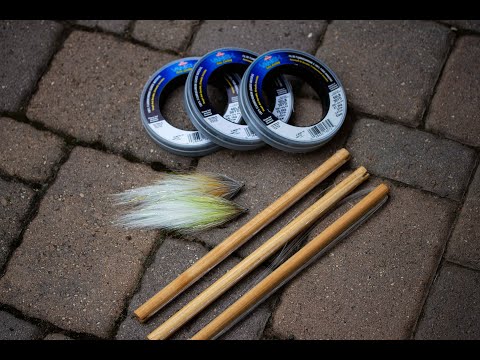
How to remove the memory from Monofilament and Fluorocarbon Leader Materials and how the Store them.